Stalingrad
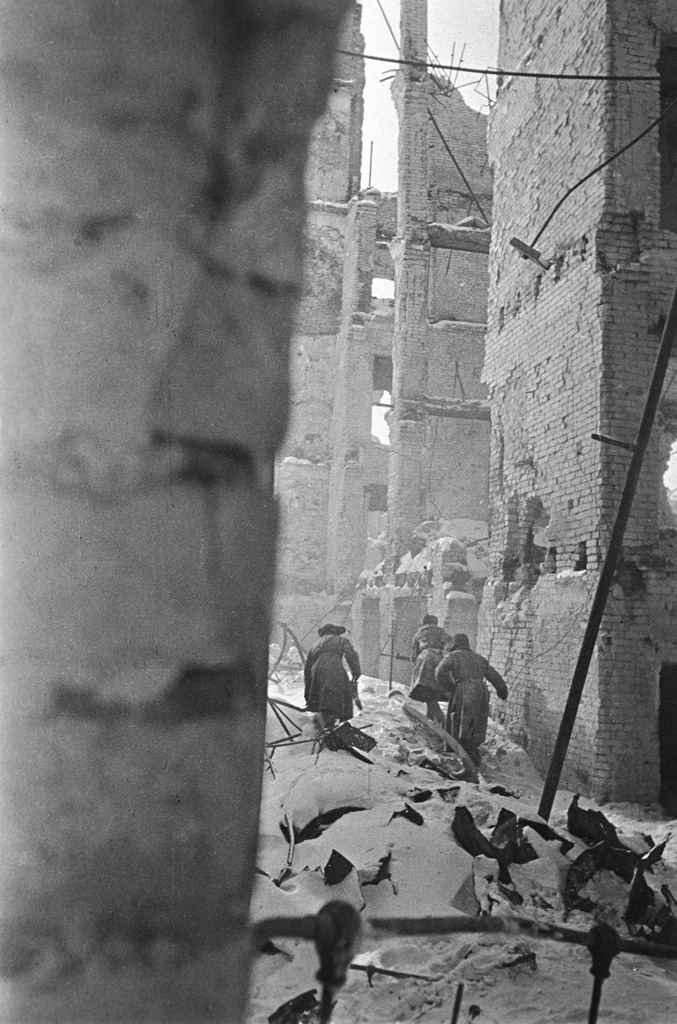
Some 200 days of street fighting and bombing left about two million casualties on both sides — one of the bloodiest battles in history. By the end, barely a building in the city was left standing intact.
War is never just arrows advancing across a map or victories recorded in history books. It is homes bombed to rubble, families torn apart, childhoods stolen — nightmares that survivors cannot wake from for decades.
This page contains historical photographs that show the reality of war. Some readers may find them distressing.
The Second World War was the deadliest conflict in human history. Some 70 to 85 million people died — about 3% of the world's population at the time. Unlike the First World War, far more civilians died than soldiers: massacres, bombing, famine and disease took the lives of countless people who never took up arms.
From the Mukden Incident of 1931, China resisted Japanese aggression largely alone for a decade. It was the earliest and longest-running battlefield of the global war against fascism. China's military and civilian casualties exceeded 35 million — an immense sacrifice for the Allied victory.
The chart shows commonly cited mid-range estimates of deaths (military and civilian combined) for selected countries. Figures vary widely between sources and are shown for rough comparison only.
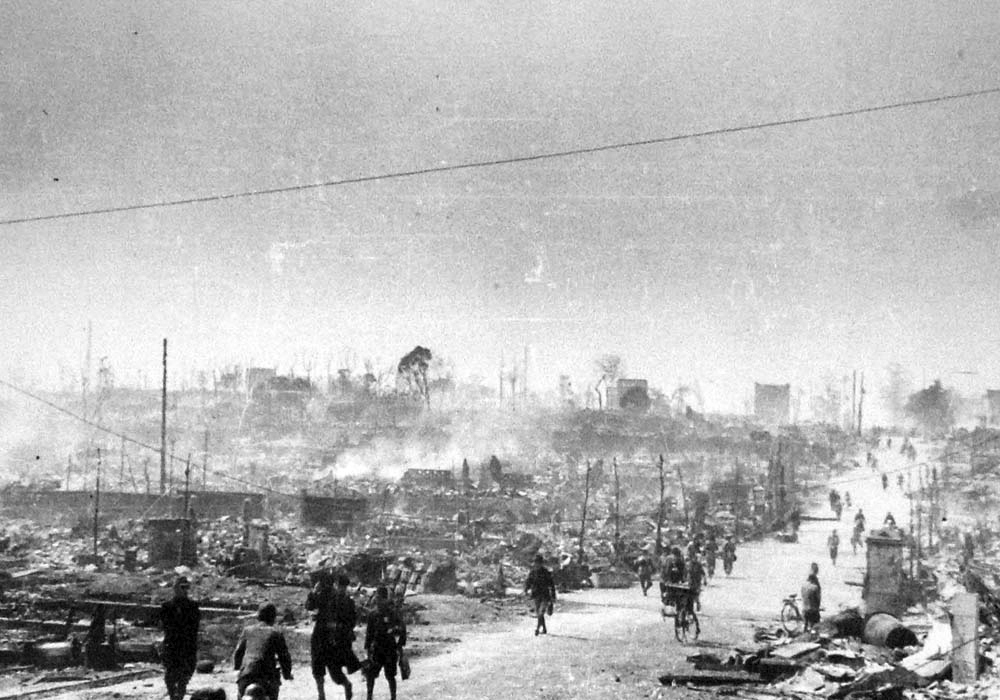
Modern war made the destruction of entire cities routine for the first time. Streets, buildings and culture built up over centuries could turn to ash in a single night.
Some 200 days of street fighting and bombing left about two million casualties on both sides — one of the bloodiest battles in history. By the end, barely a building in the city was left standing intact.
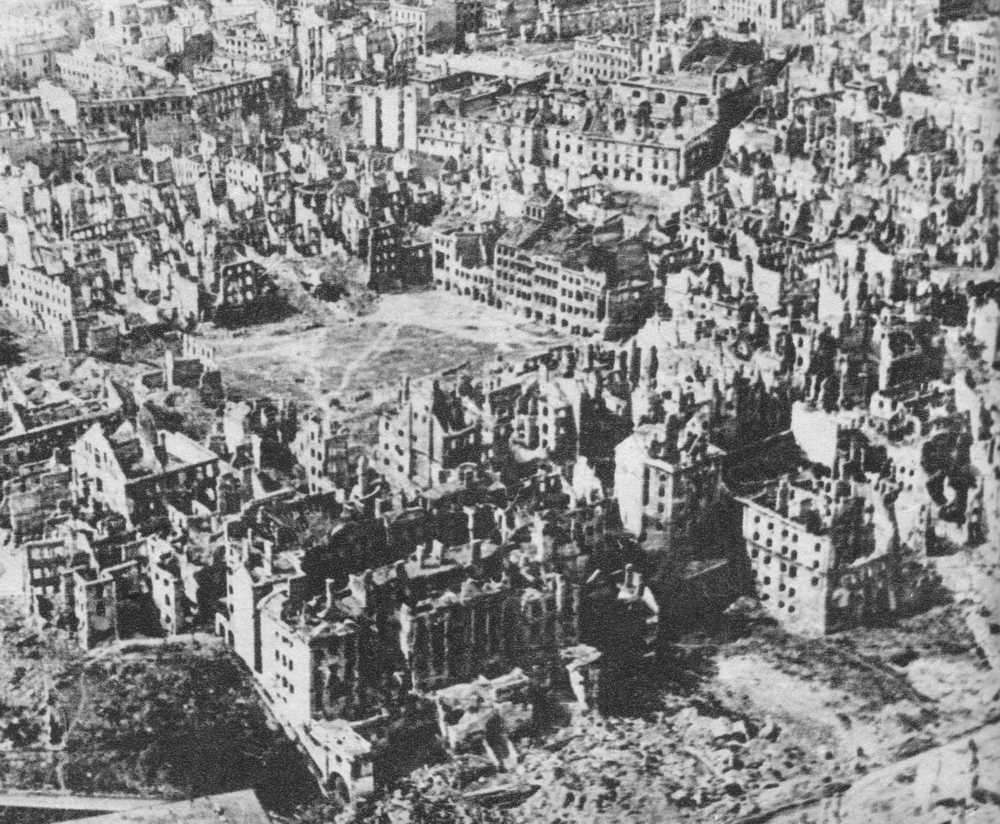
After the Warsaw Uprising was crushed in 1944, Nazi Germany expelled the surviving inhabitants and systematically demolished the city, street by street. By January 1945, about 85% of its buildings were destroyed.
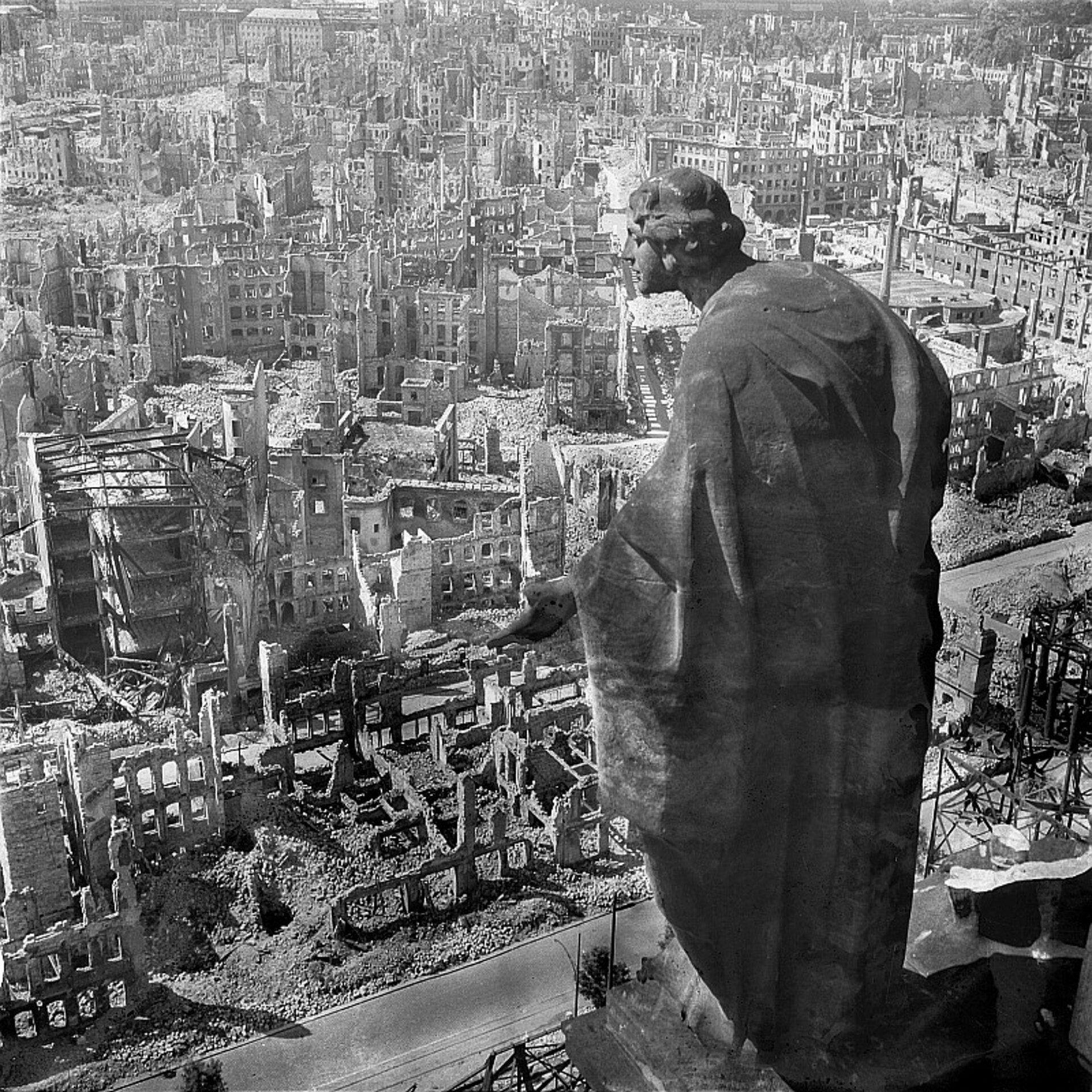
From February 13 to 15, 1945, Allied bombers struck the "Florence on the Elbe." The resulting firestorm engulfed the old town and killed about 25,000 people.
In the early hours of March 10, 1945, U.S. bombers dropped incendiaries on Tokyo, setting whole districts of wooden houses ablaze. About 100,000 people died in one night and a million were left homeless — one of the most destructive single air raids in history.
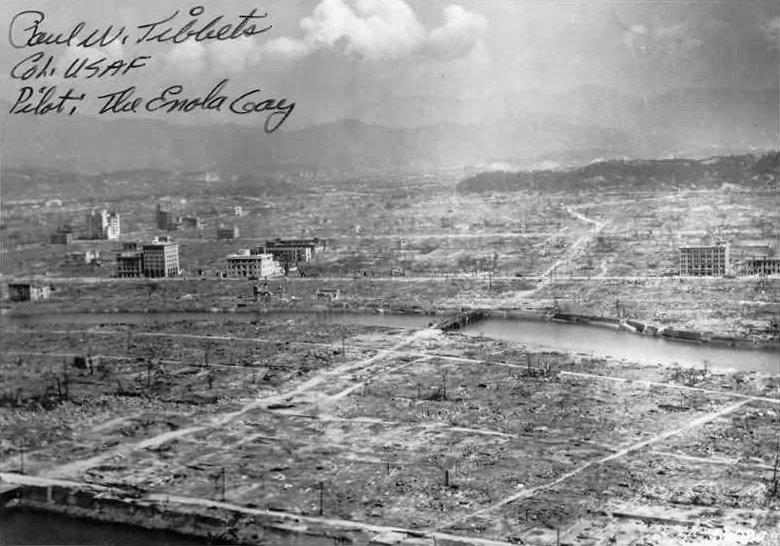
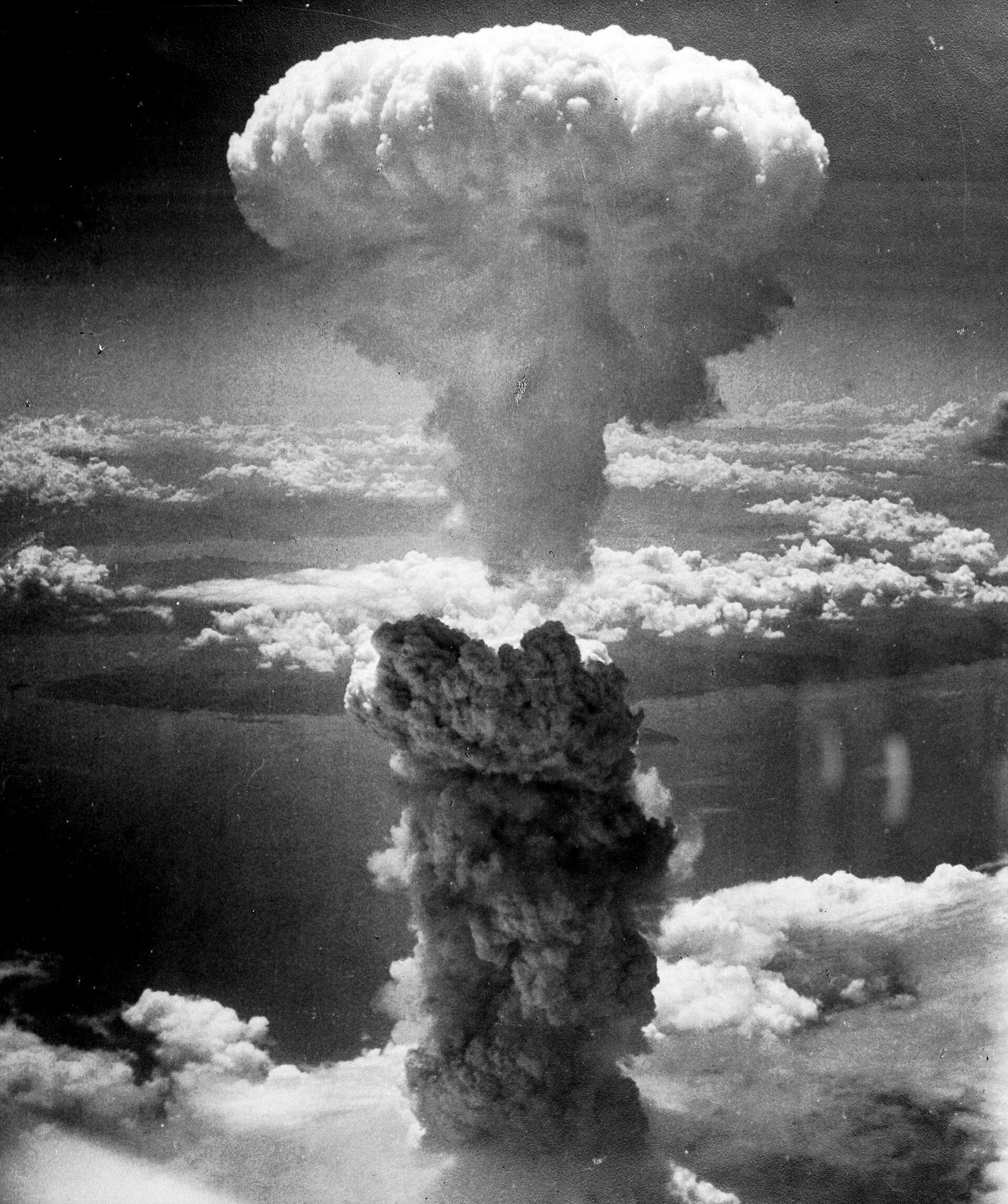
One bomb, one flash. Almost every building within two kilometers of the hypocenter was destroyed, and the city vanished within seconds. About 140,000 people had died by the end of 1945.
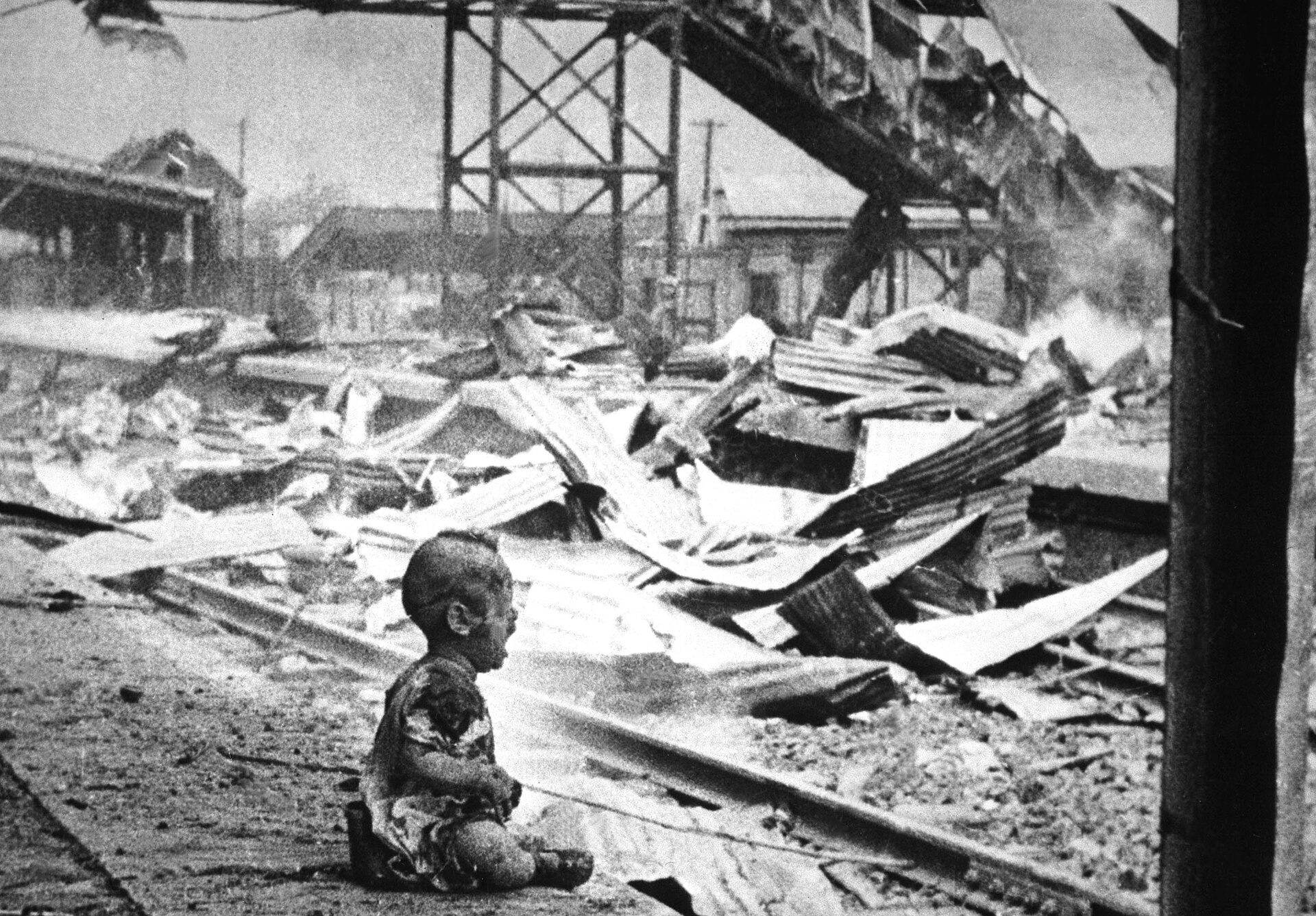
During the Battle of Shanghai, districts such as Zhabei were bombed into ruins; Nanjing suffered a massacre after it fell; Chongqing endured five and a half years of bombing. Across China, countless towns and villages were destroyed by war.
Civilians made up about two-thirds of all deaths in the Second World War. They died in massacres, air raids, forced labor and concentration camps, and from the famine and disease that war brought with it.
War took more than lives. Millions of children were orphaned; countless families were separated and never reunited. Survivors lived out their days with trauma, disability and memories they could not put into words.
At the moment of detonation, temperatures near the hypocenter reached several thousand degrees. People and buildings turned to ash in an instant. Then came the blast wave, the firestorm and the radiation.
Many of the survivors — the hibakusha — suffered for months, years and even decades from radiation sickness, leukemia, cancer and keloid scars, while also facing discrimination. Many of them spent the rest of their lives telling the story of that day, with a single wish: no more Hiroshimas, no more Nagasakis.
There has been no world war since 1945, but regional conflicts have never stopped. The harm of war is still happening today.
According to UNHCR, by the end of 2024 about 123 million people worldwide had been forcibly displaced by war, conflict, persecution and violence — a record high.
Unexploded ordnance from the Second World War is still being found across Europe and Asia, and in some countries clearance will take decades more. Landmines and unexploded bombs continue to injure civilians and children year after year.
The psychological damage of war lasts for generations: survivors with post-traumatic stress, children who have lost their parents, shattered schools and hospitals. Rebuilding often takes an entire generation.