FOR A PEACEFUL WORLD

Make peace the norm

Hiroshima's Atomic Bomb Dome has been preserved just as it stood after the blast, and was inscribed as a World Heritage Site in 1996. It is kept not to display a scar, but to remind everyone who comes here that the tragedy of war must never happen again.

01 / VOICES OF PEACE

Vows born from the ruins

Those who lived through war left later generations their heaviest and most precious warnings.

…to save succeeding generations from the scourge of war, which twice in our lifetime has brought untold sorrow to mankind…

— Preamble to the Charter of the United Nations, 1945

Since wars begin in the minds of men, it is in the minds of men that the defences of peace must be constructed.

— Preamble to the Constitution of UNESCO, 1945

Mankind must put an end to war — or war will put an end to mankind.

— John F. Kennedy, address to the UN General Assembly, 1961

Let all the souls here rest in peace, for we shall not repeat the evil.

安らかに眠って下さい 過ちは繰返しませぬから

— Inscription on the Hiroshima Memorial Cenotaph, 1952
02 / A POST-WAR PROMISE

In 1945, the world chose cooperation

Amid the ruins of the Second World War, delegates from 50 nations gathered in San Francisco in June 1945 to sign the Charter of the United Nations. As the first nation to suffer fascist aggression and the one that resisted longest, China was the first to sign. On October 24 that year, the United Nations formally came into being.

The Charter set out principles such as settling international disputes by peaceful means and refraining from the threat or use of force. Over more than eighty years the system has been far from perfect, yet it still stands for a belief humanity shares: dialogue over confrontation, cooperation over war.
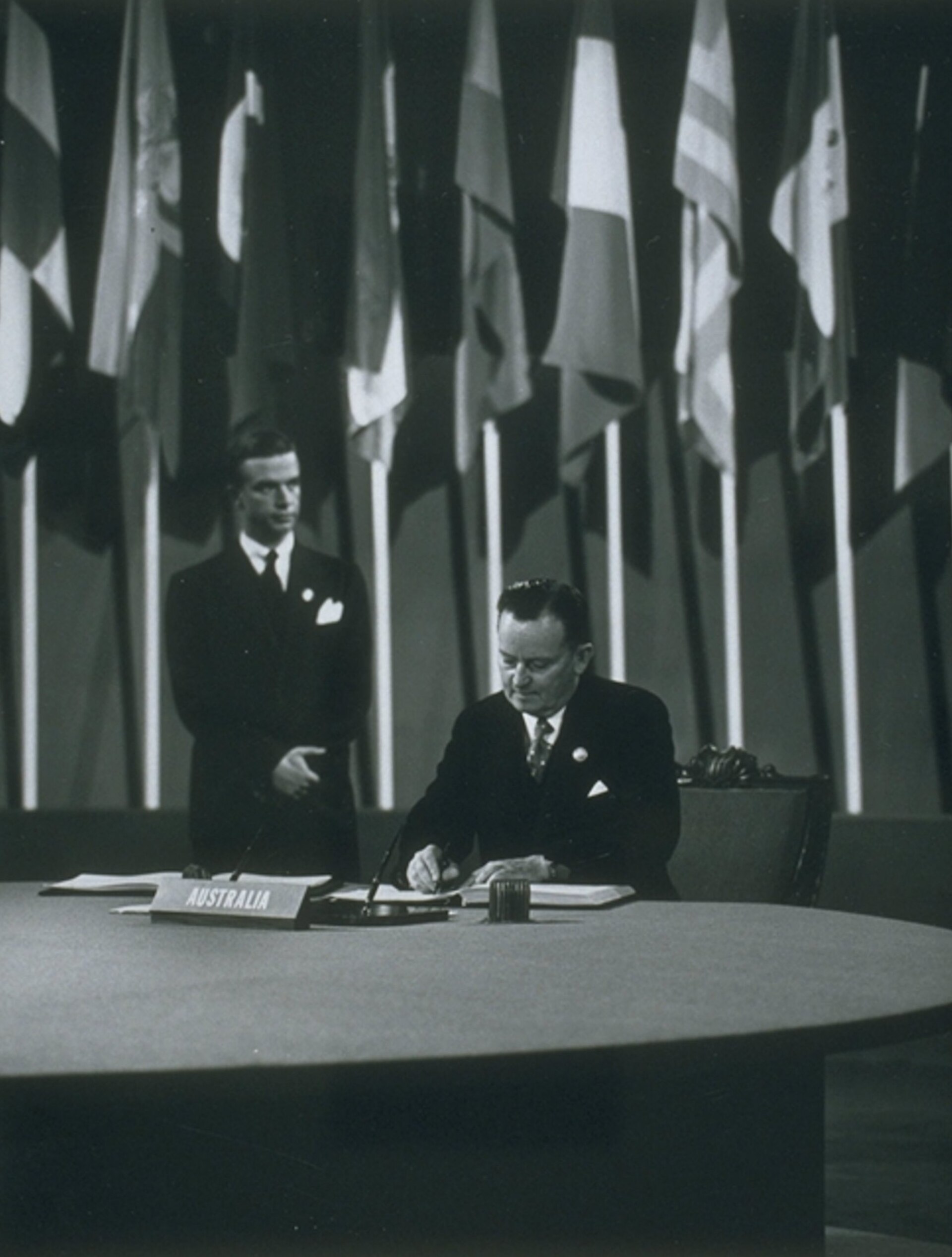
Signing the UN Charter
June 1945: Australian delegate Frank Forde signs the Charter of the United Nations in San Francisco.
03 / WHAT WE CAN DO

Peace begins with each of us

Protecting peace is not only the job of politicians and diplomats. Every ordinary person can be a force for peace.

I

Learn the real history

Read serious histories and the testimony of those who were there. Be wary of voices that glorify war or deny atrocities. Respecting the facts is the first step toward not repeating the past.

II

Visit the memorials

The Museum of the War of Chinese People's Resistance Against Japanese Aggression, the Nanjing Massacre Memorial Hall, the Hiroshima Peace Memorial Museum, the Auschwitz-Birkenau Memorial… there, history speaks to you directly.

III

Reject hatred and incitement

War often begins by demonizing "the other." Don't spread hateful words about any people, nation or group, and keep specific crimes distinct from ordinary people.

IV

Support humanitarian aid

Follow and support humanitarian organizations such as the International Committee of the Red Cross and UNHCR to help people living through war today.

V

Talk with the world

Learn another language, make friends from other countries, and try to understand different cultures and points of view. Understanding between people is the firmest foundation of peace.

VI

Pass the memory on

Listen to your elders' stories and tell them to your children. As the last witnesses leave us, carrying their memory falls to our generation.

04 / REMEMBRANCE

Light a candle for peace

For every life lost to war —
whatever their country, whatever their people.